Growing Competition Reshapes the Sports Streaming Landscape Worldwide
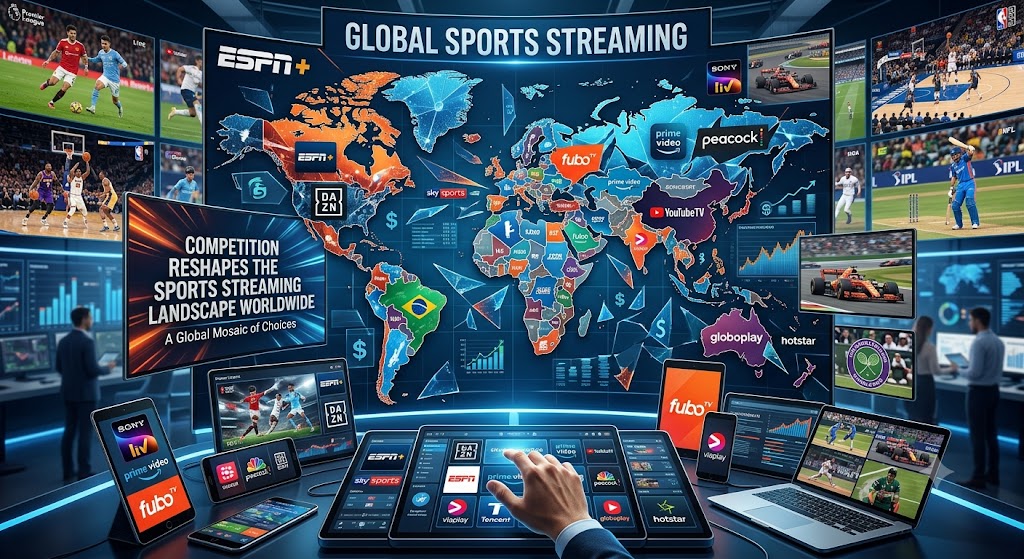
The traditional television monopoly over live athletics has officially crumbled. As cords cut at unprecedented rates globally, a massive migration toward digital-first broadcasting is completely fundamentally reorganizing how fans interact with their favorite teams. Media conglomerates that once ruled the airwaves with multi-decade contracts are finding themselves outbid by tech titans aggressively weaponizing live events to scale their ecosystem subscriptions. This isn’t a subtle transition; it’s an entire rewiring of the sports industry economy, forcing leagues to choose between the comfortable, massive reach of old-school linear networks and the lucrative, data-rich promise of international streaming platforms.
The Technological Arms Race For Fifa World Cup Live Streams
Nowhere is this multi-billion-dollar battleground more fiercely contested than in the soccer ecosystem, where preparations for the upcoming mega-tournament are driving wild platform innovations. Tech giants and primary rightsholders are pouring fortunes into infrastructure to handle the unprecedented server loads expected for Fifa World Cup Live Streams across North America and beyond. Audiences no longer tolerate the standard 30-second broadcast delays or pixelated frame drops of early web video; they expect real-time data integration, instant alternative multi-cam angles, and zero-latency feeds. This intense technological demand is separating the field into platforms that can reliably anchor millions of concurrent global viewers and those that choke under the pressure of a sudden penalty shootout.
The Persistence Of Unofficial Aggregators Like Footybite
As legal distribution fragments across dozens of different subscription apps—forcing the average household to purchase multiple monthly packages just to follow a single league—the black market has seen a massive resurgence. Centralized indexing directories like Footybite and various unsanctioned IPTV networks continue to draw millions of monthly visitors by offering frictionless, cost-free access to otherwise paywalled matches. Despite aggressive crackdowns, domain seizures, and evolving digital rights management (DRM) barriers implemented by elite leagues, these rogue platforms adapt instantly. Their persistent popularity highlights a glaring structural problem in the modern streaming era: when corporate bidding wars make sports too expensive or frustratingly complex for the everyday fan, digital piracy fills the void seamlessly.
Big Tech Outbids Legacy Television Networks
The financial leverage has shifted decisively to corporate giants whose core business models don't even rely on ad revenue or cable bundles. We are witnessing historic legal and corporate showdowns where legacy broadcasters are losing their long-standing matching rights simply because they cannot compete with the sheer capital of multinational tech companies. When platforms can bundle live Friday night baseball or exclusive football games into broader retail, cloud, or device ecosystems, they can easily absorb massive production losses that would bankrupt a traditional network. This cash influx is permanently altering contract negotiations, leaving legacy channels to scramble for niche properties or regional markets while major sports leagues chase the highest digital bidder.
Latest News In The Expanding Sports Streaming Universe
The landscape is moving incredibly fast, with major industry shakeups redefining the market status quo this year. In recent developments, the corporate tug-of-war over basketball broadcast rights has completely reshaped the media map, officially solidifying the dominance of streaming networks over traditional cable staples. Concurrently, women’s professional sports are experiencing an unprecedented viewership revolution, with leagues like the WNBA and NWSL securing historic, independent multi-million-dollar streaming deals that are breaking all-time platform ratings. Meanwhile, the upcoming 48-team tournament expansion is forcing multi-national task forces to rigorously coordinate digital infrastructure across the United States, Mexico, and Canada to ensure server stability. Additionally, major retail mergers in the sports promotions and event sectors are streamlining how digital ticketing, live broadcasts, and fan-merchandise operations integrate into single-user mobile applications.
The Future of the Stadium Experience in Your Living Room
Ultimately, the future of this global competition will be decided by how deeply a platform can immerse the spectator into the action. We are rapidly moving past the era of passive viewing and entering an age of deeply customized, interactive digital leisure environments. Fans can now toggle between standard commentary, analytical statistical overlays, or synchronized social viewing rooms to watch with friends across the world. The platforms that survive this aggressive global landscape won't just be the ones with the deepest pockets, but the ones that successfully transform a standard live match into a highly engaging, personalized digital experience.








_thumb.jpg)