Soccer Streams Crackdown Intensifies Ahead of FIFA World Cup 2026
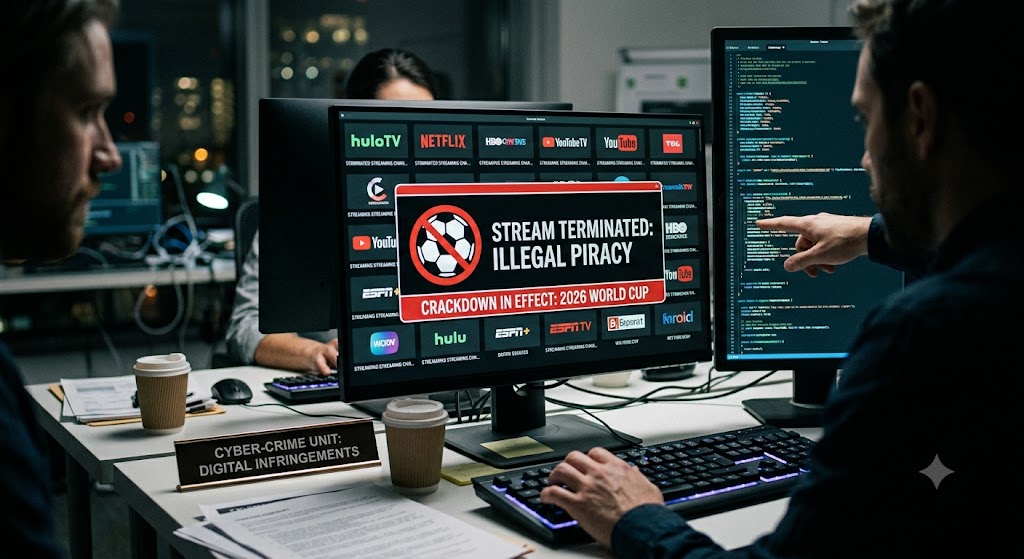
Global Authorities Launch Unprecedented Piracy Raids
As the FIFA World Cup 2026 heats up across North America, international law enforcement agencies and cybersecurity firms have launched a massive, coordinated offensive against illegal broadcasting networks. With millions of fans tuning in to watch high-stakes group stage matchups—including the United States' recent 2-0 victory over Australia and Brazil's commanding 3-0 win against Haiti—piracy networks have experienced an immediate and ruthless shutdown. Broadcasters who paid exorbitant licensing fees are working hand-in-hand with global authorities to reclaim their digital territory and protect their exclusive rights.
Shifting Tactics in the Battle for Digital Eyeballs
The modern landscape of illegal online viewing has forced a dramatic evolution in anti-piracy strategies, particularly as unauthorized providers attempt to capitalize on the tournament's massive traffic. Finding functional Soccer Streams on open platforms has become increasingly difficult as cybersecurity teams deploy advanced AI filters capable of detecting flipped screens, altered audio frequencies, and hidden animated frames within seconds of a live broadcast going active. From Southeast Asia to Europe, hundreds of domain clones are being systematically blocked daily, pushing operators into private social media circles and encrypted messaging channels to evade criminal prosecution.
Malicious Ad Networks Exploit Eager Football Fans
Beyond the legal ramifications for the operators, cybersecurity experts are warning fans about the severe personal risks associated with clicking on alternative broadcast links. Recent investigations show that a vast majority of these unauthorized websites are not actually built to deliver a stable viewing experience, but are instead designed as delivery vehicles for malicious ad scripts, forced redirects, and phishing traps. Viewers searching for a quick way to catch the action, like the dramatic exit of Turkiye following their 1-0 loss to a 10-man Paraguay squad, frequently find themselves bombarded by fraudulent software updates and aggressive tracking networks rather than the actual game.
The Future of Live Sports Broadcasting Integrity
As the tournament progresses toward the highly anticipated knockout stages, the ongoing enforcement campaigns are setting a new benchmark for intellectual property protection in the digital age. Technical operators are maximizing dynamic ad insertion and end-to-end quality monitoring to ensure that legal, licensed platforms offer a far superior experience than any unstable, risky alternative. This aggressive crackdown signals a permanent shift in how international sports properties guard their content, proving that the era of easily accessible, unauthorized live sports feeds is rapidly drawing to a close.